How to spot a good croissant
Seven signs that separate a well-made croissant from a merely handsome one, from a bakery that makes more than a thousand a day.
A croissant hides nothing. It gives away the flour, the butter, the fermentation time and the hands that rolled the dough. An industrial croissant and a boulangerie croissant can look identical in the display case and be two different things on the plate.
These are the signs we use on ours, every day, before it goes out.
The sound
Start with the noise. A well-baked croissant cracks dryly when you press its side, and sheds flakes on the tablecloth when you break it. If it gives way in silence and springs back, the dough is damp inside, or it was baked too cool, or it left the oven a long time ago.
The colour
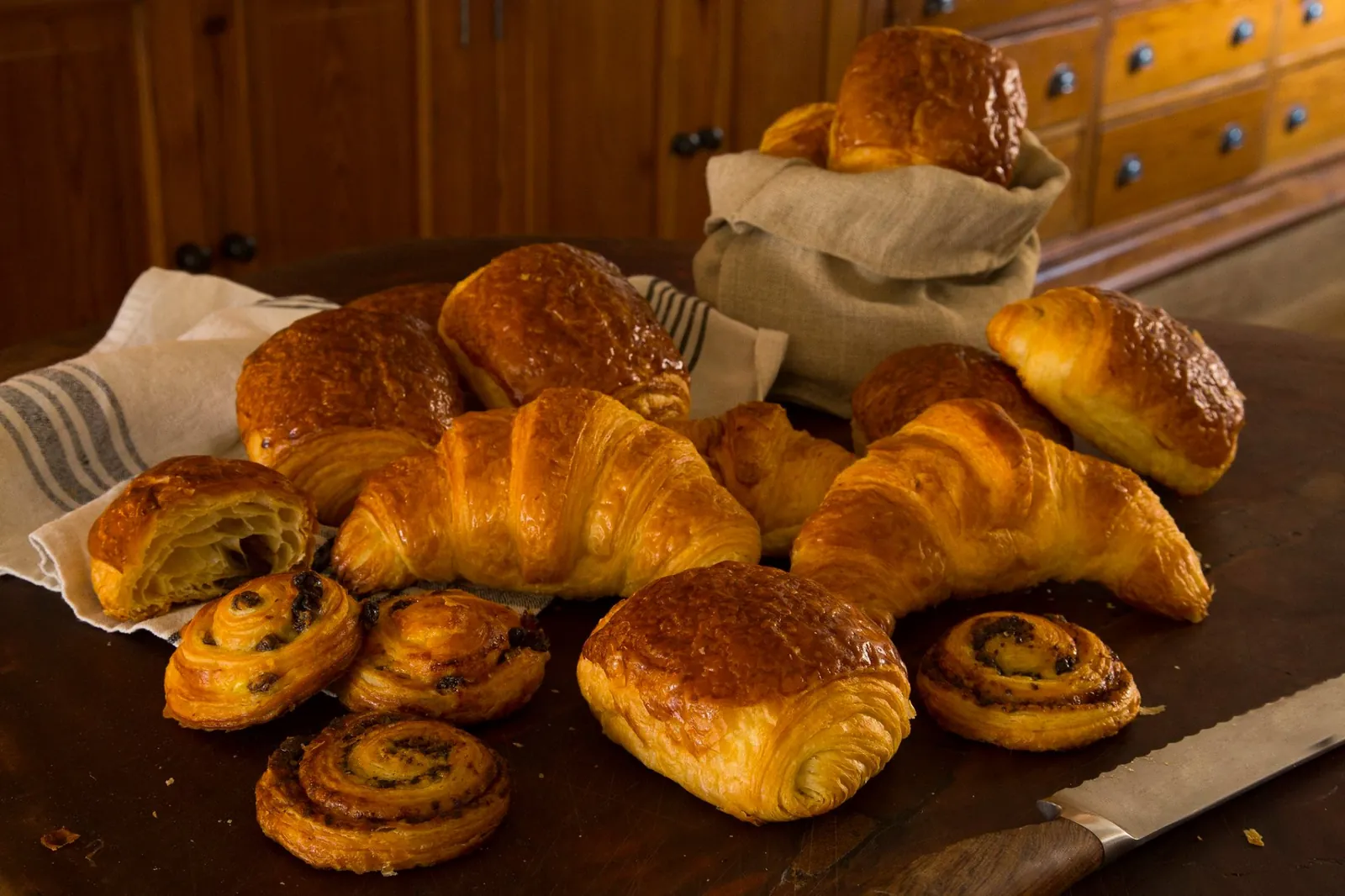
The surface should be brown and uneven, darker at the edges of the layers and paler in the folds. An even, pale yellow finish usually means frozen dough baked fast. Deep gold is not burnt. It is the sugar in the dough caramelising, and much of the flavour comes from it.
The layers at the tip
Look at the end of the croissant, where the dough was rolled. You should be able to count the layers, thin and parallel. We work through successive folds until the dough reaches hundreds of alternating layers of dough and butter. When lamination fails, the tip becomes a solid block.
The crumb
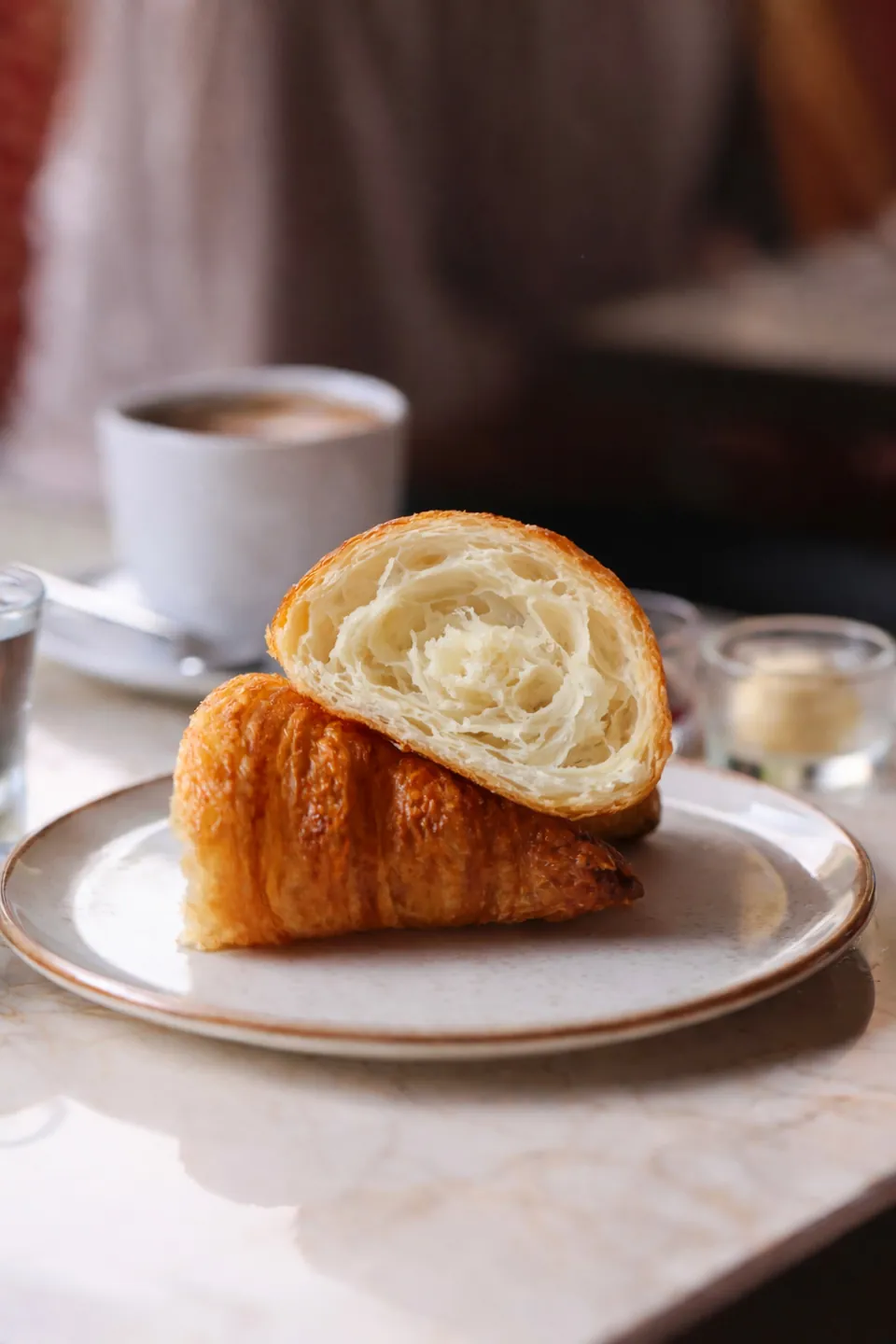
Break it open. The inside should be open, with irregular holes and shiny, almost translucent walls. A tight, spongy crumb means the dough rose through chemical leavening or too much yeast, not through time. That is the difference between a croissant and a sweet roll shaped like one.
The fat
A good croissant leaves a minimal, pale residue on the paper. Butter melts at body temperature and disappears. Margarine and hydrogenated vegetable fats coat the mouth, and the stain on the paper is opaque and stays. This is the most honest test of the lot.
The smell
Good butter smells of fresh cream, not of vanilla or perfume. A display case that smells too sweet is usually giving away flavouring, not product.
The weight
Pick it up. A seventy-gram croissant should feel lighter than it looks, because most of its volume is air trapped between the layers. If it feels like a bread roll, the dough never opened.
What we do with ours
The Mundo Pão do Olivier croissant leaves the Cambuci atelier every day. The dough is made with butter, no vegetable fat, and goes through a slow fermentation before lamination. Olivier Anquier is a third-generation baker who brought the technique from France in 1993, when he opened the country’s first boulangerie.
The plain version comes without filling, because it is the proof of the method. The same laminated dough becomes the almond croissant, the chocolate pastry and the chocolate and almond pastry, which is topped with flaked almonds and is the most ordered item in the house.
How to eat it
A croissant is at its best in the first hours out of the oven. If one is left over, keep it out of the fridge, in a paper bag, and warm it for three minutes at a hundred and eighty degrees before eating. A microwave turns laminated dough into rubber, and there is no way back.